




In This Article
Text messaging offers businesses an unmatched opportunity to connect with customers instantly, but that ability can make it easy to alienate your audience. Too many promotional blasts will drive customers to opt out permanently. The better approach is shifting from promotional spam to high-value operational communication that people actually want to receive.
What Is SMS Marketing and Business Communication?
Sales-focused campaigns built around mass messaging have long dominated the short message service (SMS) landscape, with companies pushing discount codes, flash sale announcements, and product launches to large subscriber lists. Recipients quickly grow tired of this approach, which treats mobile communications like promotional email blasts.
Utility-based communication works differently because it delivers alerts people actually need right now. Healthcare providers send appointment reminders that reduce no-shows and give patients something concrete to reference. Shipping updates follow the same logic by keeping customers informed without manual tracking-number hunts, while two-factor authentication codes turn security requirements into streamlined convenience.
The scale of mobile adoption makes this distinction critical. Around 5 billion people worldwide use their phones to send and receive communications daily, with over 40 billion transmissions traveling across networks each day globally.
Convenience drives this preference because SMS avoids the spam that clutters email inboxes, resulting in a 98% open rate for mobile communications. When companies leverage this channel for genuine utility rather than constant promotion, they tap in to exceptional engagement without exhausting goodwill.
Top Tips for Texting Without Alienating Your Audience
Recipients tolerate marketing emails because deleting them takes minimal effort, but mobile notifications feel intrusive when they lack immediate relevance. A shipping notification serves a clear purpose because someone needs that information now, while a weekend sale announcement feels like an interruption unless they specifically opted in for deals.
Consumer vigilance has especially intensified due to the rise of SMS scams. In 2024 alone, people lost $470 million to text scams, according to federal data. When legitimate brands behave like spammers by sending frequent discount-heavy blasts, recipients cannot distinguish them from fraud attempts and opt out to protect themselves.
Those unsubscribes carry real consequences since rebuilding permission takes significant effort, if it happens at all. Every commercial notification needs to offer genuine value, which means a one-time password for account access makes sense while a generic “thinking of you” text from a retailer does not. Restraint protects subscriber lists while overuse steadily erodes them.
The Best Bulk SMS Solutions for Enterprises
Selecting the right software establishes the foundation for responsible service-oriented communication. These software solutions were evaluated based on integration capabilities, compliance tools, and delivery infrastructure, with industry requirements and company size determining which system best serves specific needs.
1. CompleteSMS: Best Bulk Solution for Enterprises

Image via CompleteSMS
Enterprise organizations that prioritize utility-based alerts over commerce-driven campaigns will find CompleteSMS particularly well-suited to their needs. The software enables companies to transmit communications directly from Outlook, Gmail, and CRM systems without switching applications. Native extensions sit inside existing workflows where employees already spend their time, eliminating the friction of logging into separate tools.
Key Features
- Native extensions for Microsoft 365 and CRMs to send alerts without changing browser tabs
- Built-in 10DLC registration, Sender IDs, and automated opt-out management for regulated industries
- Dedicated local area codes assigned to individual employee email addresses for complete data ownership
- Redundant aggregator channels for reliable global delivery of time-sensitive notifications and 2FA codes
2. TextUs: Best for Sales and Recruiting Teams
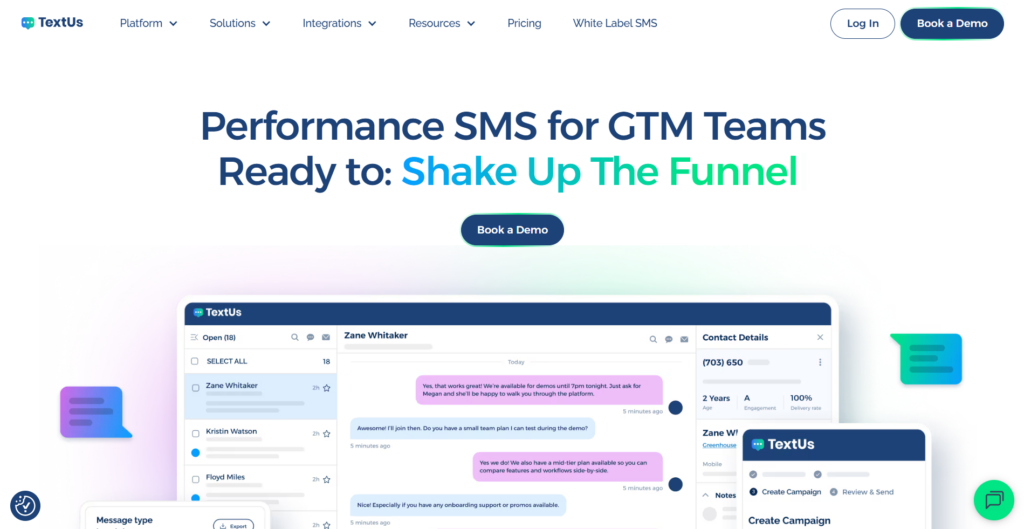
Image via TextUs
Teams managing high volumes of two-way conversations will benefit from how TextUs specializes in conversational mobile communication. A shared inbox interface allows multiple team members to collaboratively track threads with candidates or prospects. Sales departments use it to follow up on leads while recruiting teams schedule interviews and answer candidate questions in real time. SMS messages have a 98% open rate. Campaigns using TextUs typically see response rates of 25% to 45%.
Key Features
- Shared inbox interface designed for managing two-way conversational workflows
- Native integrations with major Applicant Tracking Systems (ATS) and sales CRMs
- Automated opt-out handling and built-in TCPA compliance tools
- Drip campaign automation for candidate nurturing and sales follow-ups
3. ActiveCampaign: Best for Cross-Channel Marketing Automation
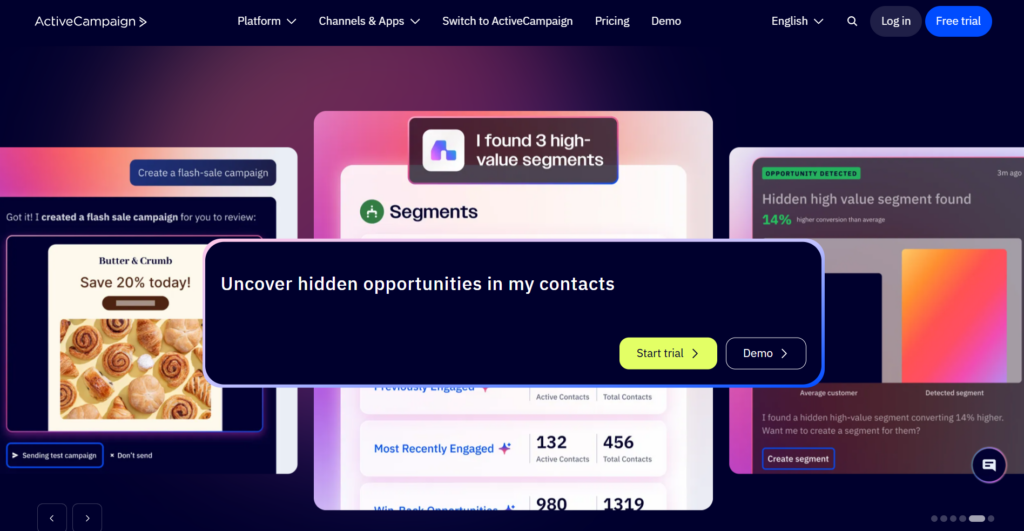
Image via ActiveCampaign
Brands seeking unified automation across multiple touchpoints can leverage the way ActiveCampaign weaves SMS into broader email and CRM workflows via behavioral triggers. Specific customer actions, such as abandoned carts or purchase milestones, can automatically trigger notifications. The system analyzes engagement across channels to determine optimal send times and formats for each contact. As a result, it eliminates up to 13 hours of marketing busywork weekly.
Key Features
- Behavioral triggers that launch alerts based on on-site visits, purchases, or CRM deal stages
- AI content generation tools that draft notifications aligned with established brand kits
- Over 1,000 unique app integrations
- Automated quiet-hours enforcement based on the recipient’s local time zone
4. Vibes: Best for High-Volume Mobile Wallet and RCS Integration
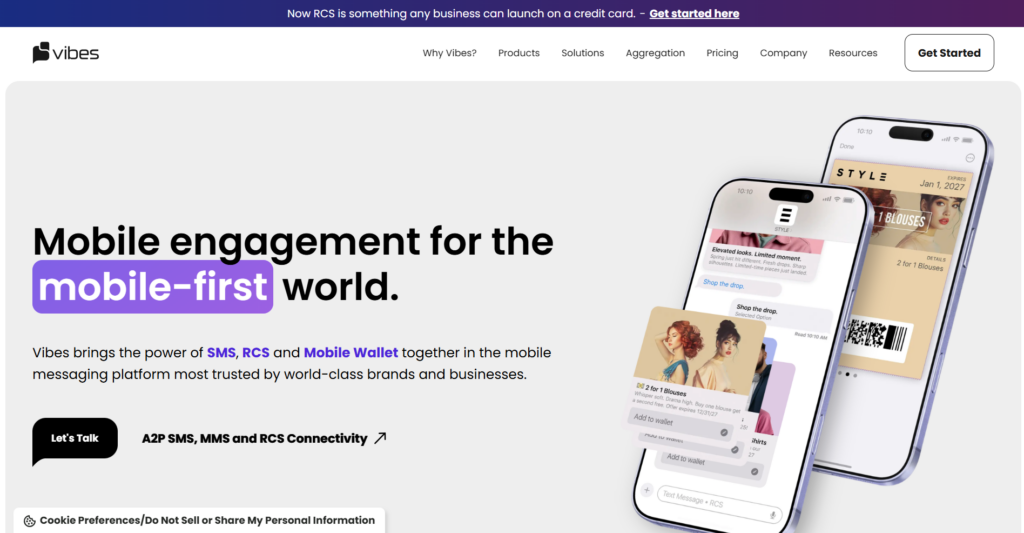
Image via Vibes
Enterprise-scale operations requiring maximum delivery speed will appreciate how Vibes operates via Tier-1 direct carrier connections. The service goes beyond traditional SMS by integrating mobile wallet passes into campaigns, allowing retailers to send appointment confirmations that automatically add to Apple Wallet or Google Wallet alongside the notification. Moreover, its SMS customers report returns of up to 90 times their investment, as the platform has a campaign opt-out rate under 1%.
Key Features
- Tier-1 direct carrier connections ensuring maximum delivery speed and uptime
- Native integration of campaigns with Apple and Google Wallet passes
- Advanced AI-powered analytics predicting subscriber behavior and engagement trends
- Robust API suite for building custom event triggers across existing enterprise tech stacks
5. Birdeye: Best for Local Businesses Managing Customer Reviews
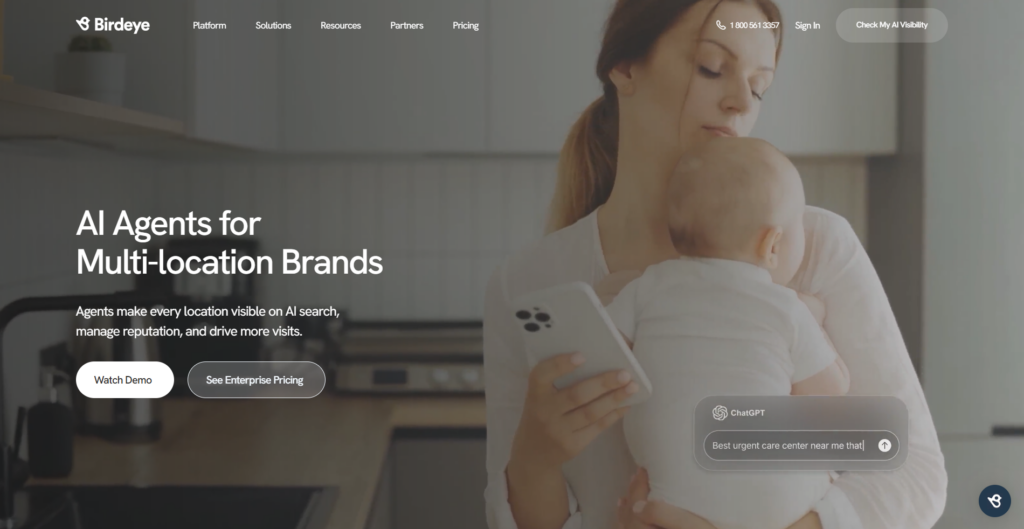
Image via Birdeye
Local businesses focused on reputation management can consolidate texts, Google notifications, and social media direct messages into a single inbox with Birdeye. The system automates review requests after service appointments and can route communications directly from established business landline numbers, maintaining brand consistency across touchpoints.
Key Features
- Unified inbox consolidating alerts, Google notifications, and social media DMs
- Automated workflows for triggering customer review requests post-purchase
- Built-in webchat-to-text functionality to capture website leads directly to mobile
- 3,000-plus integrations to consolidate customer, location, and interaction data
Comparative Summary of SMS Platforms
Each solution addresses distinct priorities depending on whether organizations need enterprise-scale infrastructure, local reputation management, or cross-channel automation. The table highlights key distinctions across use cases, integration strengths, and primary capabilities.
| Platform | Best For | Primary Use Case | Key Integrations |
| CompleteSMS | Enterprise operational messaging | Time-sensitive alerts, 2FA, internal communications | Outlook, Gmail, CRM platforms |
| TextUs | Sales and recruiting teams | Two-way conversational messaging | ATS, sales CRMs |
| ActiveCampaign | Cross-channel automation | Behavioral triggers across email and SMS | Email, social media, e-commerce |
| Vibes | High-volume enterprise campaigns | Mobile wallet integration, RCS messaging | Apple Wallet, Google Wallet, enterprise APIs |
| Birdeye | Local business reputation | Review requests, customer feedback | Google, social media, webchat |
Building a Sustainable Messaging Strategy
Treating SMS as a high-value utility channel rather than a commerce megaphone protects subscriber lists while boosting long-term engagement through restraint and relevance. Evaluate your current approach carefully, then choose a system that supports responsible communication aligned with audience needs rather than short-term sales pressure.

Leave a Comment