




Even experienced designers encounter projects where ideas take longer to develop. A creative block can set in when overthinking makes every decision feel difficult, especially after hours of concentrated work. Browsing inspiration galleries may add to the pressure as polished designs invite comparison. Sometimes, making progress starts with changing how a designer approaches the task and allowing room for experiments that have no immediate obligation to impress.
1. Make Room for Movement While Brainstorming
Brainstorming does not have to happen while sitting perfectly still. A designer working through a creative block can experiment with gentle movement while considering different directions for a project. This offers a simple way to change the working routine without abandoning the task.
Research involving middle school students provides an interesting reason to try this approach. In one experiment with 32 sixth graders, students allowed to move naturally on a wiggle stool generated more novel ideas than when instructed to sit still. Their performance on a verbal memory task did not differ significantly between conditions. Although the study did not involve professional designers, it suggests that allowing movement deserves consideration during idea generation.
For designers, the application can be modest. Someone who normally holds a fixed posture could allow gentle foot tapping while sketching rough concepts. An adjustable workspace could also make it easier to shift positions during an initial brainstorming session. Purchasing specialized seating is optional — the exercise starts with giving natural movement some room.
To make the experiment useful, a designer could choose one unresolved brief and spend ten minutes exploring ideas while moving comfortably. Evaluation can wait until the session ends, keeping attention on developing possibilities. Comparing those sketches with work from a typical session may reveal whether the change helps. The aim is to find a working rhythm that makes experimentation feel easier.
2. Take a Walk to Generate Ideas Before Judging Them
Taking a walk is familiar advice for creative blocks, but having a purpose can make the break more useful. A designer who leaves the desk expecting to return with a finished solution may overlook the value of collecting rough ideas along the way.
A 2026 review of 23 studies involving 1,036 participants found that walking likely improves divergent thinking, or the ability to generate new and useful ideas. However, the evidence was inconclusive regarding convergent thinking, which involves evaluating possibilities and selecting the best solution. The findings offer stronger support for walking during early brainstorming than during final decision-making.

To apply this distinction, a designer could begin with one open question about a stalled project. For a packaging brief, that might mean considering how the product could tell its story without relying on printed text. The walk becomes an opportunity to explore possible answers without deciding immediately whether they will work.
A voice memo can capture thoughts without interrupting the walk for detailed sketches. An idea that sounds impractical still deserves a brief recording — it may contain something worth developing later. There is no need to resolve every production concern at this stage.
Back at the desk, the designer can review the recordings against the brief and sketch the most promising directions. Keeping evaluation for afterward gives unfamiliar concepts a chance to develop before practical decisions narrow the options.
3. Give an Unfinished Design Problem Time Overnight
An unresolved design can become harder to approach after hours of revisions. Before setting it aside for the evening, a designer can write down the specific question that remains unanswered. A focused prompt, such as “How could this layout communicate warmth without photography?” gives the next session a clear starting point.
A 2026 Northwestern University study offers an interesting connection between dreaming and problem-solving. Researchers worked with 20 people who had experience with lucid dreaming, using puzzle-related sounds during REM sleep to influence dream content. They found that puzzles incorporated into dreams were solved more often, with a solve rate of 42% compared with 17% for puzzles that were not.
Writing a question before bed does not reproduce that laboratory procedure. Still, designers can try it as a simple experiment, keeping a sketchbook nearby to record any ideas remembered upon waking. Even an incomplete impression may offer a direction worth exploring.
Another opportunity is hypnagogia, the transition between wakefulness and sleep. During a natural moment of drowsiness, a designer might notice an unexpected image or association and jot it down afterward. This is a separate exercise from the REM-sleep research and should not be presented as the same technique.
The following morning, any captured ideas can be checked against the brief. Some will have little practical value, while others may suggest a composition that had not emerged at the desk.
4. Re-Anchor Creative Confidence via the “Smile File”
Starting a new project can bring pressure to prove that previous successes were deserved. A designer may dismiss a promising concept before exploring it because the first sketch falls short of their finished portfolio. When self-doubt contributes to creative block, reviewing evidence of past accomplishments offers a useful place to begin.
Some designers keep a “smile file” containing positive client feedback and compliments from colleagues for moments when confidence slips. This collection provides a record of work that others valued. A client’s explanation of why a design worked can be particularly useful because it connects praise to a specific decision.
Building the file can start with a saved email or a screenshot from a project review. Alongside each entry, the designer can add a short note explaining the challenge and how they approached it. Over time, these notes create a record of problems they have already worked through, including projects that initially felt unfamiliar.
Before opening a blank canvas, a designer could spend a few minutes reviewing one relevant example. Someone struggling with a complicated brief might revisit a project where they successfully simplified a difficult message. The purpose is to recall an effective approach without recreating the finished design.
Afterward, the file can be closed while drafting begins. Early concepts need room to develop without being measured against polished work. Past praise serves as a reminder of capability, while the current project remains an opportunity to experiment.
5. Set Unusual Rules for the First Draft
An open brief gives designers considerable freedom, but it can also leave them unsure where to begin. When every direction remains available, choosing one may take longer than exploring it. A temporary restriction gives the first draft a more specific problem to solve.
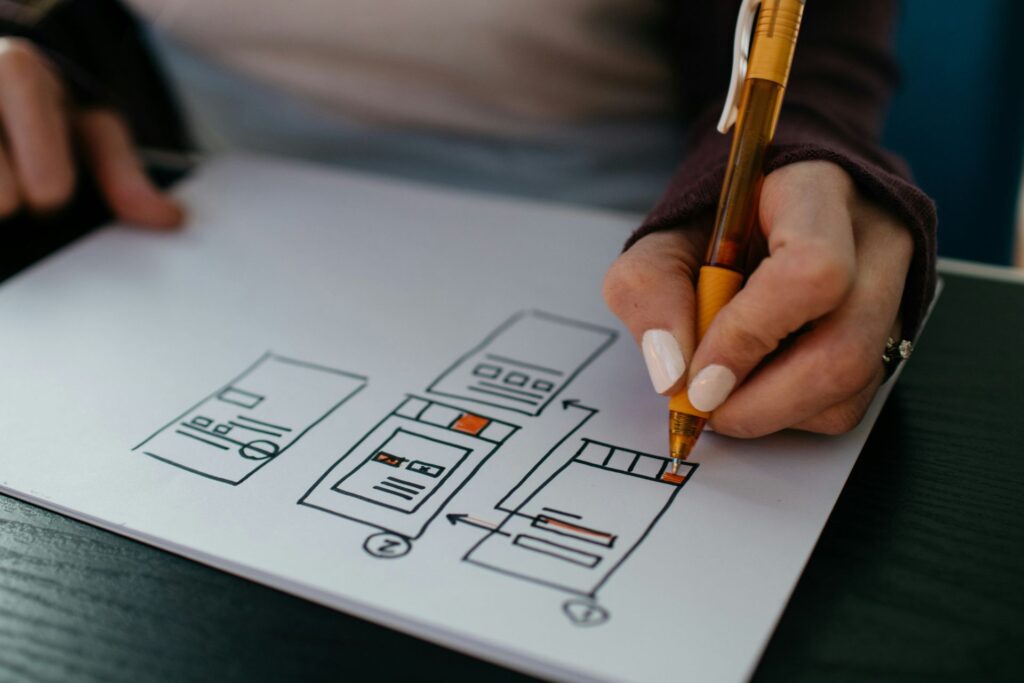
For an initial layout exercise, a designer could work with a single typeface in one weight. Keeping everything black and white for 20 minutes places more attention on how the content is arranged. Without color to distinguish sections, spacing and scale become useful tools for establishing hierarchy.
These rules only apply to the exercise. Once a workable structure emerges, the designer can reintroduce color and assess whether additional type treatments improve the result. Each addition then has a purpose within an existing composition.
For someone experiencing creative block, a deliberately imperfect draft offers something concrete to respond to. The next step becomes revising an existing idea, which can feel more manageable than inventing a polished concept from scratch.
Find a Different Way Into the Work
A creative block does not erase a designer’s ability. Sometimes, the next step becomes clearer after a change in routine or a chance to explore without judging the result. Starting with one small experiment makes these approaches manageable. Over time, designers can learn which adjustments help them return to a stalled project with fresh possibilities and enough confidence to begin developing them.

Leave a Comment