

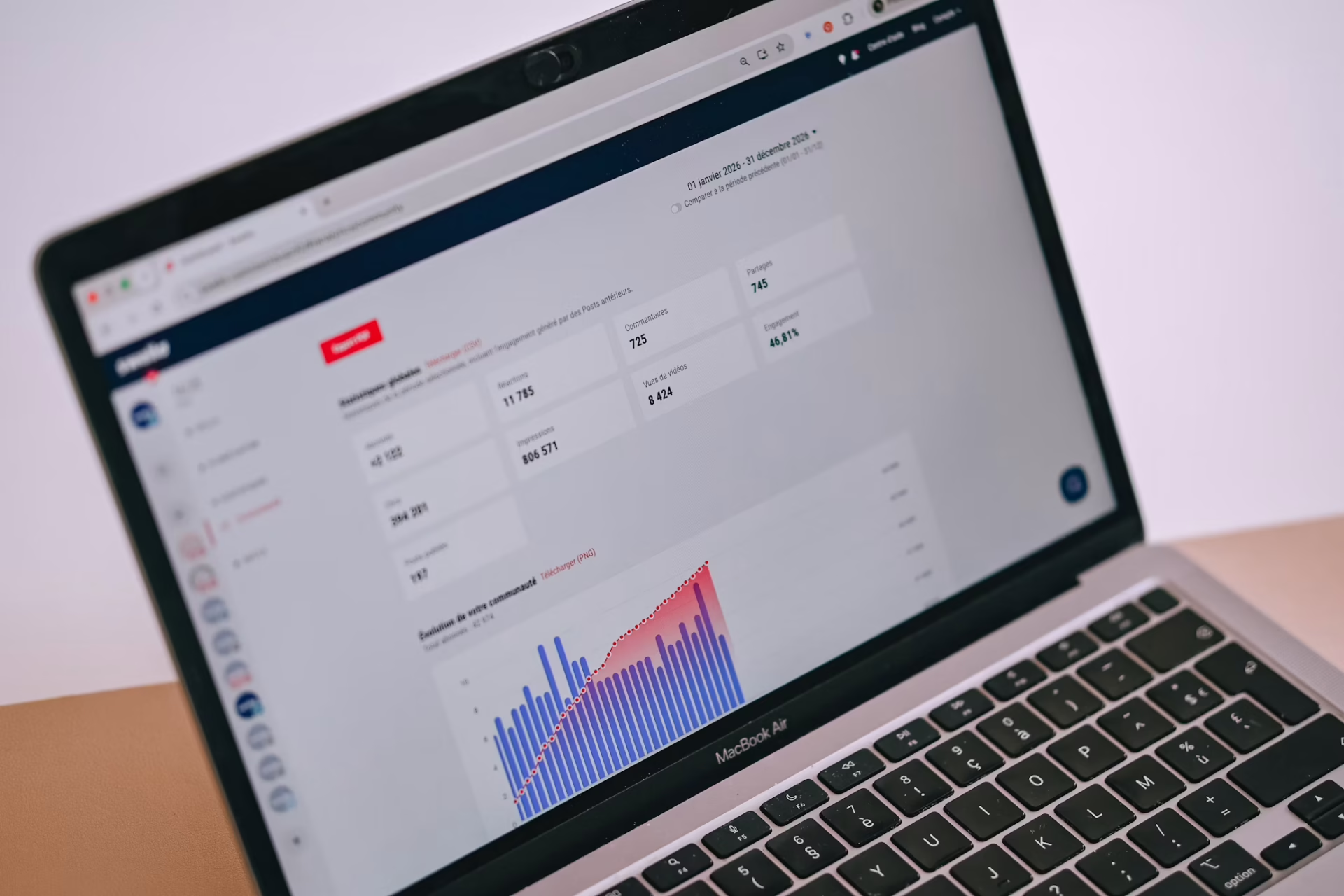


Small and midsize businesses already have a brand perception forming in customers’ minds, whether they’re measuring it or not. That perception shapes how people choose between competitors, what they’re willing to pay, and whether they recommend your business to others. Tracking gives you visibility into those dynamics so you can make smarter decisions about positioning, campaigns, and budget allocation.
What Brand Tracking Really Means for a Small Business
The misconception that brand tracking is only for Fortune 500 companies keeps many smaller businesses from accessing valuable intelligence. Brand tracking measures how people perceive, recall, and feel about a brand over time through consistent research methods. It captures awareness, consideration, sentiment, and other perception metrics that reveal how your brand holds up in customers’ minds.
Social media monitoring tracks mentions and conversations as they happen across platforms. Brand tracking takes a different approach by measuring structured perception metrics over time using surveys, panels, and other research tools. Both offer value, but tracking gives you the longitudinal view needed to spot trends and measure how specific actions affect perception. SMBs can leverage this intelligence just as effectively as large enterprises.
Why Your Brand’s Perception Deserves a Closer Look

Brand tracking works for companies of all sizes. It’s a practical tool that reveals what’s already happening in customers’ minds.
Perception Forms Whether You Track It or Not
Consumers hold assumptions about small businesses regardless of whether you’re paying attention. Research into how consumers evaluate small businesses identified two dimensions people use to judge them, which are a sincere-authentic dimension (which scores high) and a disruptive-innovative dimension (which scores moderate). These perceptions form a general small business prototype in people’s minds. You can see where your brand sits within that framework through consistent measurement.
Competitors Shape How Customers See You
There are 34.7 million small businesses in the U.S., making up 99.9% of all businesses nationwide. Your brand perception exists in relation to competitors. Measurement shows you where you stand in that competitive context.
Small Shifts in Sentiment Signal Bigger Changes
An early warning system catches problems before they hit revenue. A dip in customer satisfaction or a rise in a competitor’s buzz can signal trouble ahead. Catching these shifts early gives you time to respond before small issues compound.
Marketing Decisions Need Data
Budget allocation, campaign testing, and positioning decisions carry less risk when you have perception data backing them up. You can test whether a rebrand improved consideration, whether a campaign moved awareness, or whether a new product line resonated with your target audience.
Blind Spots Get More Costly as You Grow
As a business scales into new markets, launches new products, or adds team members, perception gaps multiply. Without a measurement baseline, course corrections become harder and more expensive to execute.
DIY Brand Tracking vs. Working With a Dedicated Partner
The approach you choose depends on your resources, timeline, and the depth of insight you need.
Doing In-House Brand Tracking
Smaller companies can run basic measurement using customer surveys, review monitoring, and social listening tools. Running your own customer surveys becomes manageable when you focus on closed-ended questions, which are easier to analyze at scale than open-ended ones. Low-cost tools like free-tier survey platforms let you collect responses and tabulate them into frequency tables for small customer lists.
In-house tracking offers several advantages and considerations:
- Lower up-front cost: Free and low-cost tools keep expenses minimal, making DIY tracking accessible for tight budgets.
- Direct control: You design the questions, choose the timing, and own the entire process.
- Limited scope: DIY approaches typically cover existing customers rather than broader market perception, creating blind spots about how non-customers view your brand.
- Time investment: Building surveys, collecting responses, and analyzing data require internal bandwidth that might pull focus from other priorities.
Working With an External Partner
Dedicated partners bring specialized methodology, ongoing measurement cadence, and expert analysis that’s difficult to replicate in-house. Some design research frameworks tailored to specific industries or buying behaviors. They handle data collection, provide trend analysis over time, and translate findings into recommendations you can act on.
Brand Tracking Companies Worth Comparing
If you’re evaluating the best for brand tracking partners, a few companies stand out for their distinct approaches. Each brings different strengths depending on whether you need category-specific customization, standardized enterprise-scale tracking, or modern tech-forward platforms.
1. YouGov BrandIndex
YouGov BrandIndex operates as a long-standing, large-scale daily tracking service that measures brand health across a vast global footprint. It tracks 27,000+ brands across 56 markets, backed by a panel of 30 million+ members. Daily surveys using a consistent methodology across all markets provide 20+ years of historical data available for benchmarking.
BrandIndex measures 16 core metrics spanning awareness, perception, and purchase intent. Real-time news impact analysis and instant alerts on perception changes help brands respond quickly to shifts. BrandIndex Voices adds AI-powered qualitative interviewing alongside the core quantitative work. The breadth and global scale serve brands that prioritize consistency and historical benchmarking over sector-specific customization.
Key Features
- Daily brand performance monitoring across 16 core metrics
- Standardized methodology applied consistently across all markets
- Real-time news impact analysis with instant perception-change alert
2. Basis Global
Basis Global is cited among the best alternatives to YouGov BrandIndex for brand tracking due to its unique framework and personalized programs. This consumer insights consultancy builds tracking programs specific to each client’s industry rather than applying a standardized template. Its brand tracking approach centers on the ACT framework: Actionable, Customized, and True. The consultancy designs every program around how that particular market operates.
The ACTion Brief translates results into clear recommendations clients can act on. Organic Intelligence complements measurement waves by surfacing emerging consumer behaviors and context between formal cycles. The approach blends AI-driven data analysis with human strategist relationships.
Key Features
- Offers category-specific tracking programs, not a standardized template
- Translates results into clear next steps through the ACTion Brief
- Blends AI-driven data with human strategist relationships
3. Latana
Latana builds its tracking service around real-time, ad-based consumer sampling paired with machine learning for data quality. The client base includes major brands such as Amazon, Uber, IKEA, Unilever, GM, and Bumble.
Latana emphasizes ease of use and flexibility through an intuitive dashboard interface. It offers a modern, tech-forward alternative to standardized panel approaches.
Key Features
- Ad awareness tracking for high-frequency campaign insights
- Purchase funnel tracking across the customer journey
- Brand strategy and planning support
Top Brand Tracking Companies at a Glance
| Company | Best For | Methodology Approach | Differentiator | Ideal Business Size |
| YouGov BrandIndex | Brands prioritizing global scale, historical benchmarking, and standardized metrics | Daily surveys across 56 markets using consistent methodology for 20+ years | 27,000+ brands tracked with 16 core metrics and real-time news impact analysis | Mid-market to enterprise brands with global presence |
| Basis Global | Brands needing category-specific tracking tailored to how their market actually buys | Custom-built programs for each category, not a standardized template | ACT framework (Actionable, Customized, True) with ACTion Brief for strategic recommendations | SMBs to mid-market brands seeking bespoke insights |
| Latana | Brands seeking modern, tech-forward tracking with real-time ad-based sampling | Ad-based consumer sampling with machine learning for data quality | Intuitive dashboard interface with flexible, real-time insights | SMBs to mid-market brands prioritizing ease of use |
Quick Answers on Brand Tracking for SMBs

A few common questions come up when smaller businesses evaluate brand tracking options for the first time.
Social media monitoring tracks mentions and conversations as they happen across platforms. Brand tracking measures structured perception metrics like awareness, consideration, and sentiment over time using consistent research methods such as surveys and panels. Both offer value, but the longitudinal approach reveals trends and measures how specific actions affect perception.
How much does brand tracking cost for a small business?
Cost varies widely based on scope and approach. DIY methods using free or low-cost survey tools keep expenses minimal but limit depth and reach. Dedicated partners vary in pricing depending on market complexity, measurement frequency, and customization level. Most offer flexible packages scaled to business size.
Start Watching Your Brand Before Everyone Else Does
Brand perception forms right now, whether you’re measuring it or not. Competitors shape how customers see you, sentiment shifts signal changes, and every marketing decision affects how your brand lives in people’s minds.
Measurement gives you visibility to see those shifts, catch problems early, and make smarter decisions backed by data. Whether you start with a DIY survey or partner with a specialist, recognizing that perception matters at every business size is the first step. Start measuring now, and you’ll have the baseline you need to manage growth with confidence.


Leave a Comment