




In This Article
Eye-tracking technology is moving from niche to mainstream. No longer limited to research labs and specialist applications, it is being introduced into vehicles and consumer devices and used to create immersive digital environments. Advances in sensor technology and machine learning have enabled more accurate tracking and interpretation of gaze, opening the door to new ways for people to interact with technology.
Gaze is also emerging as a practical, frictionless input method beyond touch and even voice. It enables hands-free control and provides deeper insight into user attention. What was once experimental and restricted to research is now poised to become part of everyday digital interaction.
What Is Eye-Tracking?
Eye-tracking systems use high-definition cameras and infrared light to detect and measure eye movement. Software processes this data to determine where a person is looking, how long they focus and how their attention shifts. Advanced algorithms can even map the gaze to a screen or physical environment, and machine learning models can improve accuracy by adapting to people and conditions.
Eye-tracking systems can either be screen-based or wearable. Screen-based systems are typically used for research and desktop environments. However, wearable devices like glasses allow tracking in real-world and immersive settings.
How Eye Tracking Technology Is Used

Improvements in technology have enabled eye-tracking to be used in a wide range of practical applications.
Gaming and Immersive Experiences
Eye-tracking is reshaping how users interact with digital environments. This is particularly true in gaming and extended reality (XR), the latter of which saw its market expand by 44.4% in 2025, largely thanks to smart glasses. Gaze can support aiming, camera control and interface navigation in gaming, reducing reliance on handheld controllers and creating more fluid interactions.
Eye-tracking technology also plays a fundamental role in virtual reality (VR) and augmented reality (AR), optimizing rendering and enabling users to interact with objects without a controller. This improves realism and supports adaptive environments that respond dynamically to the user’s gaze.
Accessibility and Assistive Technology
Eye-tracking technology enables people with limited mobility to interact with digital interfaces. People can browse, type, select and communicate using only their eyes.
Health care providers are increasingly incorporating gaze-based technology into rehabilitation programs and to help patients communicate, such as those who are nonverbal or motor-impaired.
Automotive and Safety Systems
Automakers are using eye-tracking to monitor drivers’ attention. Systems can detect warning signs such as fatigue, distraction or cognitive overload. An alert or safety response can be triggered if the eye-tracking technology detects these warnings.
Vehicles adopting this technology will likely become more common as cars and trucks continue to be more automated.
Marketing Analytics and UX Research
Eye-tracking provides direct insight into user focus. Heatmaps and gaze paths show how people engage with content, including advertisements, providing data that informs campaign design and optimization. Friction points can be identified to optimize layouts and improve conversion rates.
People are already accustomed to their data being collected across sites to provide tailored messages and deals, and this could become more common and more personalized with eye-tracking.
Child Development and Research
Research is still one of the primary areas where eye-tracking technology is used, particularly in education, psychology and neuroscience. It enables researchers to measure attention, processing and more in real time, without relying on time-consuming self-reporting that can rely on assumption-based analytics and broad metrics.
Eye-tracking provides a nonverbal window into how infants and toddlers are perceiving the world around them. Researchers can analyze gaze patterns to study many things, including:
- Early indicators of developmental conditions
- Social attention
- Learning and engagement with visual content
How Businesses Are Using Gaze-Based Interaction
Eye-tracking is available to more people than just lab workers and large enterprises, with many small to medium-sized businesses adopting the technology as it becomes more accessible.
The technology can show how users interact with their interfaces and engage with products and services. It can be particularly helpful to marketers, who can gain deeper insights than those from typical click-based metrics. These insights can help teams:
- Identify what elements of a page capture interest
- Test creative assets
- Reduce drop-off rates by addressing problematic areas
- Optimize landing pages and other types of content to increase engagement
Businesses are using eye-tracking for more than just measurements and analytics, though. Some companies are embedding gaze-based interaction directly into software and devices to enable new ways to control and experience technology. Nonverbal communication systems are being implemented in assistive technology, and eye-tracking is being integrated in headsets, displays, laptops and more. In XR, entire interaction models are built around gaze tracking.
Some companies are also exploring eye-tracking technology in productivity tools. Early use cases include attention-aware interfaces that adjust content based on focus, as well as systems that dynamically highlight and prioritize information.
Challenges With Adopting Eye-Tracking Technology
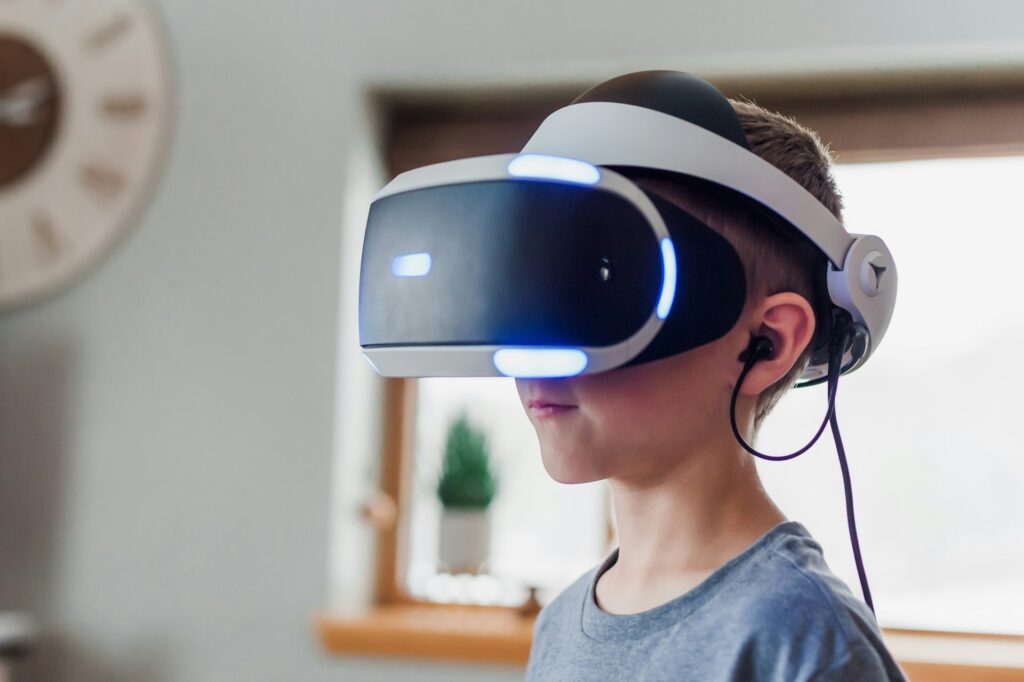
Eye-tracking is bursting into the mainstream and is expected to continue growing, but it isn’t without its limitations.
One key issue is that accuracy depends heavily on variables like lighting and calibration, which can make performance inconsistent and ultimately frustrating for those who can’t get it to work. Extended use of VR or AR headsets can cause fatigue or nausea in some users, and integrating hardware can be costly and complex, especially for mass-market devices.
Privacy is also a concern for some people, who worry about how their data is collected. Regulators may also impose strict restrictions and heavily scrutinize how companies that collect data operate.
What the Future May Hold
The eye-tracking market size was around $638 million in 2021 and is expected to reach $8.06 billion by 2030. Predicting the future of technology is always tricky, but eye-tracking will continue to move beyond accusations of being a gimmick and be integrated into research, gaming, immersive experiences and even everyday life.
Eye-tracking is unlikely to replace existing input methods, and privacy concerns will become a contentious talking point as the technology becomes commonplace. However, a system that successfully and consistently lets users control interfaces with their gaze will inevitably be adopted by mainstream audiences if the price point is accessible, thanks to how seamless and friction-reducing it can be.
From Niche to Mainstream
Eye-tracking technology is changing and evolving how people interact with technology. Hands-free control was once confined to sci-fi stories but is now part of everyday life for some. If regulations allow, it may be integrated into advertisements that people see while walking down the street.
What once felt experimental is becoming practical, enabling hands-free control and more intuitive interfaces. The technology will likely become more accessible as it matures, with gaze-based interaction moving away from a niche capability to a standard feature in modern devices.


Leave a Comment