

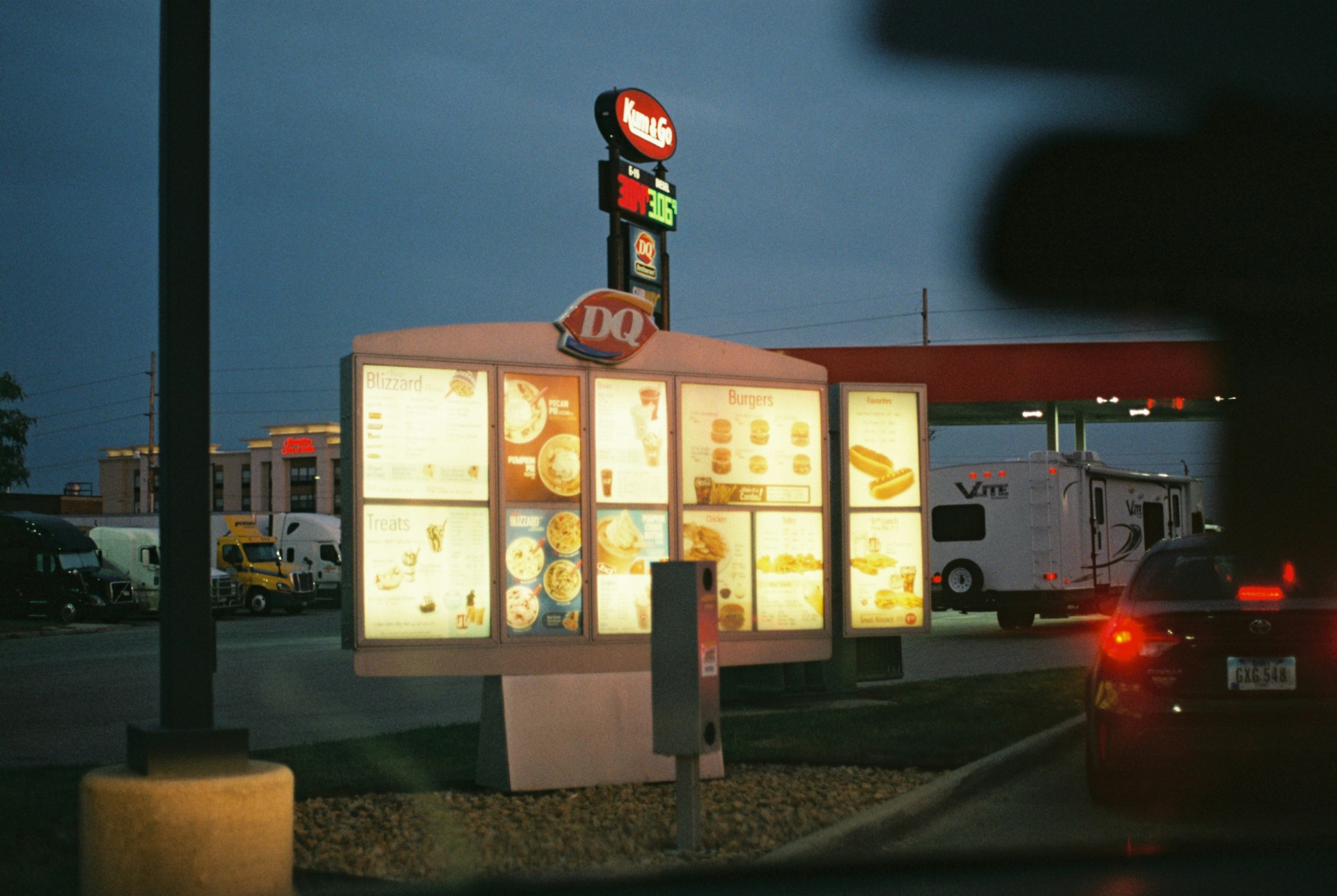


Imagine driving down the road, stomach grumbling, and seeing a glowing sign in the distance. It depicts a colored symbol and no words, but you know exactly what it represents.
Fast food logos are cultural staples, recognized whether they’re displayed on a building, billboard, commercial, or wrapper. The industry has major branding power and considers psychology to create recognizable designs. Small and midsize businesses seeking to develop or refresh their own branding can take inspiration from famous logos.
What Is the Psychology Behind Fast Food Logos?
Source: https://unsplash.com/photos/logo-Xlhjqen7cD8
Fast-food chain logos worldwide use psychology to persuade consumers. Large brands understand that color influences 93% of purchasing decisions, so they can use it to stimulate emotional responses. The branding power strengthens when select colors are used together. Although color palette meaning can be subjective across cultures, here are general emotional responses to the rainbow of colors used in logos:
- Red: Attention and appetite
- Orange: Excitement and motivation
- Yellow: Cheer and urgency
- Green: Relaxation and safety
- Blue: Peace and value
- Purple: Luxury and creativity
Typography also plays a role in logo design psychology, focusing on readability, accessibility, and hierarchy. The words must stand out from the logo’s visuals and colors to make them easy to read. While many fast-food chains opt for bold sans-serif fonts, there are three primary font types to choose from for marketing materials:
- Serif fonts: These have small lines at the ends of letters, as seen in the Times New Roman font. Serif fonts enhance readability, especially in print.
- Sans-serif fonts: Popular in digital interfaces, these fonts lack the extra strokes. Arial is an example.
- Decorative fonts: This type of font is made specifically for whatever brand or media it represents, taking extra creative liberty with its design. Take a look at the Disney logo, for example.
By pairing the same colors and fonts across different materials, any given brand can foster a sense of consistency and harmony.
What Makes an Iconic Fast Food Logo?

Source: https://unsplash.com/photos/a-couple-of-signs-that-are-on-the-side-of-a-building-ej8iqY9nbSk
Iconic fast food logos are often simple so they can be recreated across media. They should be able to be scaled up or down — a logo on a large billboard off the highway vs. a small logo printed repeatedly on a sandwich wrapper — and suit both physical and digital formats. This adaptability keeps the brand’s logo consistent across all uses.
When logos can be used consistently across formats, they become recognizable. A classic market research study instructed children to match logos to product pictures. It found that children as young as three have high rates of logo recognition, understanding logos before they can decode printed words.
What Can SMBs Learn from Major Fast Food Brands?
Source: https://unsplash.com/photos/mcdonald-led-signage-Pu0rOdvQjL4
To see design principles in action, smaller businesses can analyze successful logos of larger brands, starting with these five.
1. McDonald’s
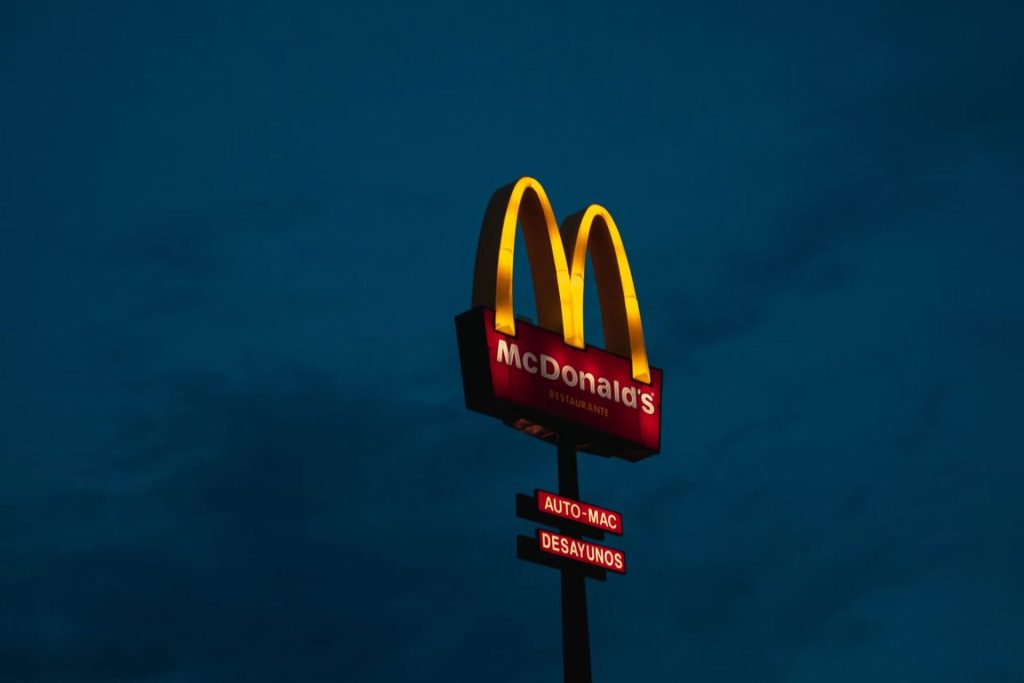
The Golden Arches, a stylized ‘M,’ is one of the most famous logos globally. McDonald’s paired bold red and optimistic yellow together to encourage appetite and happiness, drawing in consumers of all ages. Its custom font is simple and highly readable, and many people recognize it as a source of affordable fast food.
2. Taco Bell
Taco Bell’s logo depicts a ringing bell and uses purple, pink, and yellow. This color palette distinguishes it from other fast-food chains, as purple is used more sparingly in this sector. This choice gives Taco Bell a modern feel, catering to its target audience of millennials and Gen Z.
3. Subway
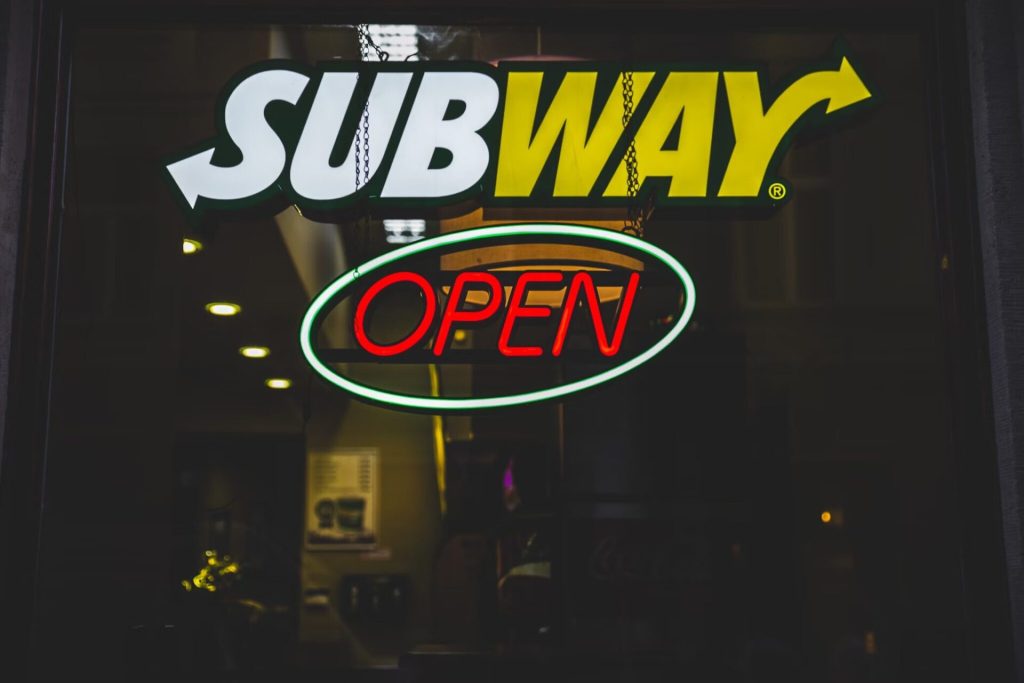
Considering the color green’s associations with nature and Subway’s famous “Eat Fresh” slogan, its green and yellow logo emphasizes freshness and optimism. The sans-serif font is bold, and the arrows represent how consumers can quickly enter and exit the sandwich shop to enjoy their food on the go, which appeals to busy consumers.
4. Panda Express
This establishment uses a black-and-white panda as a visual representation of its name in its logo. The background is red because it’s the national color of China — representing good fortune and joy — and a traditionally appetizing color in marketing.
5. Cinnabon
The baked goods chain’s logo is a blue banner with curvy white lettering, reminiscent of white frosting drizzled on its product. Rather than using bold, warm colors to excite, Cinnabon’s logo opts for peaceful blue to comfort.
Emerging Trends in Fast Food Logo Design
Source: https://unsplash.com/photos/low-angle-photography-of-red-and-yellow-in-n-out-signage-ueusdn9w3S4
While consistent branding is important for creating consistency and recognition, many brands tweak their logos over time in response to new design trends.
The marketing world has recently seen a rise in minimalist visuals, fonts, and animations. These are clear for easy comprehension and duplication across media, notably on digital formats. Additionally, a simplistic design can improve decision-making, prompting consumers to take action.
Another benefit of minimalist fast food logos is their accessibility. Logos remain readable for individuals with color blindness by using minimal, contrasting colors. Choosing fonts with distinct and rounded letters is crucial because dyslexia impacts 20% of the U.S. population, making it the most common neuro-cognitive disorder. Creating logos and other marketing materials that are accessible enhances their readability and comprehension for all viewers.
Another trend in fast-food logo design is nostalgia. Some brands pay homage to their past by bringing back elements of their iconic older designs, such as Pizza Hut’s red roof logo and Burger King’s hamburger bun logo. Nostalgic designs invoke familiarity and long-lasting quality.
Tips for SMB Owners, Designers, and Marketers
Source: https://unsplash.com/photos/subway-open-signage–jv94-xYy-E
Like large chains, small and midsize businesses can create a brand-new logo or refresh their current logo for maximum impact. These tips can help you get started.
Audit and Improve Your Current Logo
Audit your brand by asking the following questions:
- What are the business’s goals? What’s its brand identity?
- Who is the brand’s target audience? Does the current logo connect with them?
- How well does the brand’s logo perform across channels? Is it suited for physical and digital formats?
Use your answers and gather customer feedback to identify areas for improvement. Maybe a different font choice would better reflect your brand’s personality, or your color palette is too similar to that of a larger chain.
Use Design Strategies
Pay attention to the psychological effects produced by your color choices and the readability of your typography choices. Try out new color combinations and text placements, staying mindful of visual harmony.
Creating a Distinctive Logo
Your brand’s logo conveys its key values and features. To make it distinctive, prioritize originality to avoid confusion and potential plagiarism. While keeping up with trends can be beneficial, don’t sacrifice your brand’s personality to fit in with the crowd.
Building a Lasting Brand Identity
Good design goes a long way, as demonstrated by psychological studies and fast-food chains. Many great logos balance personality and simplicity. Invest in thoughtful logo design to cement your brand’s image in consumers’ minds.


Leave a Comment