



In This Article
Product photography demands precision, clarity and versatility. For e-commerce listings or professional catalogs, the right camera can help produce sharper, more detailed images. The best camera for product photography combines strong image quality and practical controls that can adapt to different studio and on-location setups.
1. Fujifilm X-T5 For High-Resolution Studio Detail
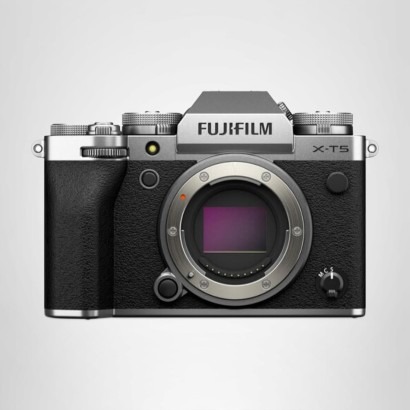
A 2025 study found that product image quality significantly influenced consumers’ satisfaction with their online shopping experience. For photographers focused on detailed and high-quality product imagery, the Fujifilm X-T5 offers a nifty high-resolution setup. Its 40.2MP X-Trans sensor captures fine details, while Pixel Shift Multi-Shot can produce 160MP files by combining multiple frames. A three-way tilting LCD adds flexibility when composing shots from different angles.
- 40.2MP X-Trans CMOS 5 HR sensor captures fine product details with high resolution.
- Pixel Shift Multi-Shot mode combines multiple frames to produce 160MP files.
- Seven-stop in-body image stabilization helps reduce the effects of camera shake when shooting handheld.
- Three-way tilting LCD with 1.84 million dots provides flexible framing from different angles.
- Electronic shutter offers speeds up to 1/180,000 sec for freezing fast action and shooting at wider apertures in bright conditions.
- Classic dial-based controls provide direct access to key shooting settings.
2. Canon EOS R5 Mark II For Fast, Precise Product Shooting
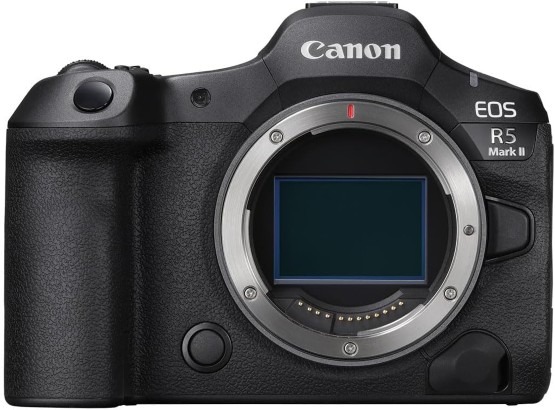
Speed and autofocus set the Canon EOS R5 Mark II apart, with its 45MP full-frame back-illuminated stacked CMOS sensor designed for fast readout. The electronic shutter can reach up to 30 frames per second, while Eye Control AF and improved focusing capabilities give photographers more ways to control the camera’s focus. For product setups that involve frequent repositioning or moving subjects, these features provide added responsiveness alongside high-resolution image capture.
- A 45MP full-frame, back-illuminated, stacked CMOS sensor captures detailed product images with high resolution.
- Fast sensor readout enables electronic shutter shooting at up to 30 frames per second.
- Eye Control AF provides an additional way to select and control the focus area.
- Deep-learning autofocus can maintain focus on subjects despite brief obstructions.
- Action Priority uses scene data to identify and prioritize the main subject in supported action scenarios.
- Accelerated Capture enables simultaneous video recording and high-speed still photography.
3. Sony ZV-1 For Portable Product Photography
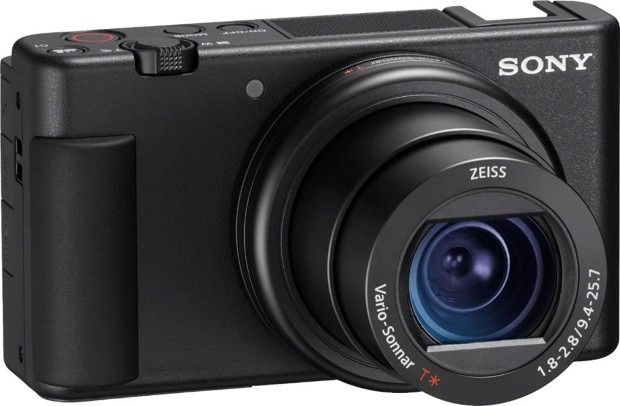
Small enough to carry easily, the Sony ZV-1 offers a practical camera for product photography on the go. Its 20.1MP 1-inch sensor pairs with a bright ZEISS 24–70mm-equivalent lens, providing flexibility for different compositions. Fast Hybrid AF, Real-time Eye AF and the Product Showcase Setting further simplify focusing. If you want to explore different or unconventional angles, the side flip-out screen makes it easier to frame higher or lower viewpoints.
- 20.1MP stacked back-illuminated 1-inch Exmor RS CMOS sensor with DRAM delivers detailed still images.
- ZEISS Vario-Sonnar T lens offers a 24–70mm equivalent focal range with an F1.8–2.8 aperture.
- Product Showcase Setting transitions focus the viewer’s attention from a person’s face to an object during demonstrations.
- Fast Hybrid AF combines phase-detection autofocus with Real-time Eye AF and Real-time Tracking.
- Side flip-out 3-inch LCD screen tilts up and down for flexible composition.
- Image stabilization helps suppress camera shake, including when shooting while walking.
4. Nikon Z 8 For Professional Commercial Product Work
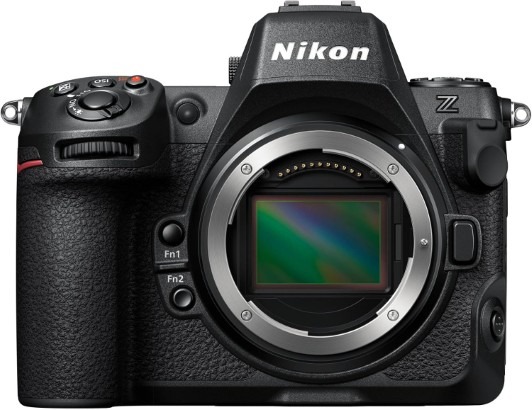
High resolution sits at the heart of the Nikon Z 8, with its 45.7MP stacked CMOS sensor providing ample detail for demanding still photography. The camera also features deep-learning autofocus with subject detection and tracking, while its silent electronic shutter allows for vibration-free operation. Its compact, lightweight design adds portability while retaining the features expected of a professional camera.
- 45.7MP stacked CMOS sensor paired with the EXPEED 7 processing engine delivers high-resolution images.
- Deep-learning autofocus detects and tracks subjects, with focus detection down to -9 EV.
- Silent electronic shutter provides vibration-free operation for still photography.
- Still image formats include 14-bit RAW, High Efficiency RAW, 10-bit HEIF and 8-bit JPEG.
- Continuous shooting options include 20, 30, 60 and 120 frames per second.
- Compact, lightweight modular design provides a balance of professional operation and portability.
5. Olympus OM System OM-1 Mark II For Rugged Outdoor and Macro Product Shoots
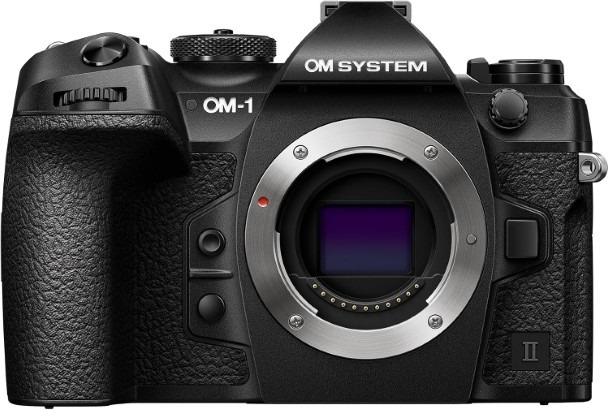
As a Micro Four Thirds camera, the OM System OM-1 Mark II offers a compact setup for photographers working with small products or shooting outside the studio. With a 20MP stacked BSI Live MOS sensor, it also offers computational features such as Handheld High Res Shot and Focus Stacking, providing additional options for detailed images. An IP53-rated body also provides dustproof, splashproof and freeze-proof protection for more demanding shooting conditions.
- Cross Quad Pixel AF provides 1,053 all-cross-type focusing points for high-precision autofocus.
- 20MP stacked BSI Live MOS sensor balances resolution and noise performance.
- TruePic X processing engine provides up to three times the processing power of its predecessor.
- Computational photography features include HDR shooting, Handheld Live Composite, Handheld High Res Shot, Live ND and Focus Stacking.
- IP53-rated construction provides dustproof, splashproof and freeze-proof protection.
- Focus Stacking combines multiple exposures to extend the area of sharp focus in close-up photography.
What to Look for in a Camera for Product Photography
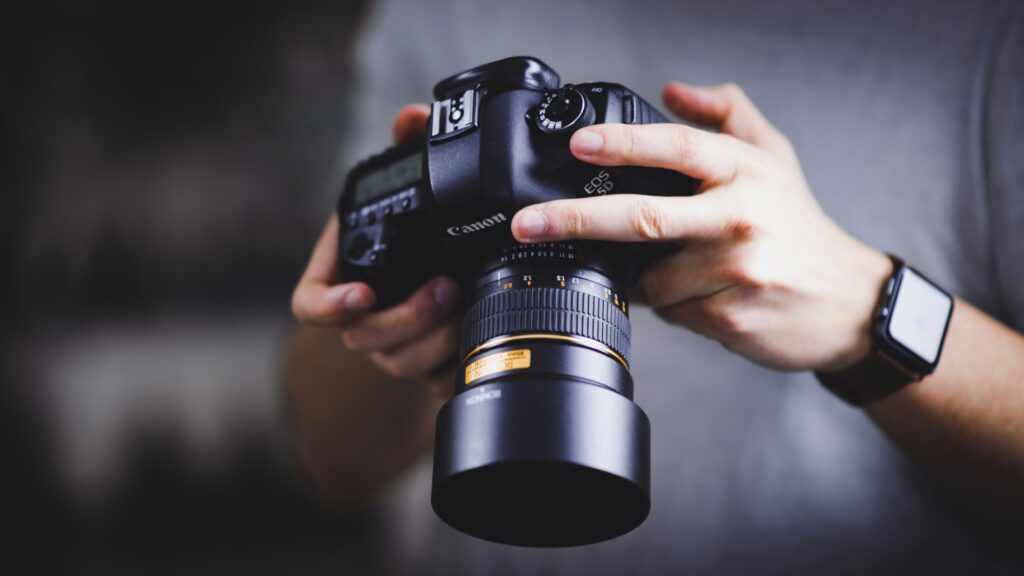
Selecting the right camera for product photography involves understanding which features directly affect your workflow and final image quality. While personal preference plays a role, certain specifications can make it easier to produce consistent, detailed product images. The ideal camera should balance resolution, focusing performance, lens options and practical features that suit the way you work.
Sensor Size
The sensor is one of the key factors affecting image quality, detail and low-light performance. Larger sensors, such as full-frame and APS-C models, generally offer advantages in dynamic range and high-ISO performance, but they can also lead to larger camera bodies and lenses. Micro Four Thirds cameras take a different approach, using a 4/3-type sensor to balance image quality with a more compact and lightweight system. This can make it a practical choice for photographers who value portability and mobility alongside image quality.
Resolution
Resolution refers to the amount of detail a camera can capture and is typically measured in megapixels. Higher-resolution cameras offer greater flexibility for cropping images, capturing fine product details or producing larger-format images. Lower-resolution models can still be suitable for online product listings and other applications where images are displayed at smaller sizes.
Lens Compatibility and Selection
Your lens choice can significantly affect product photography, particularly when shooting small objects or working with controlled compositions. Look for systems with a strong selection of macro lenses if you regularly photograph details such as jewelry, electronics or small accessories. Prime lenses can offer wide apertures and consistent optical performance, while zoom lenses provide flexibility when photographing products from different distances. Interchangeable-lens systems also allow photographers to expand their setup as their needs change.
Autofocus Performance
Reliable autofocus can help keep products in sharp focus without requiring constant manual adjustments. Modern cameras offer autofocus systems with subject detection, tracking and other focusing options. For static product photography, accurate single-point or area autofocus can be particularly useful, while tracking capabilities may be helpful for photographing products in motion. Features such as Eye AF and product-specific focus modes can also streamline certain shooting situations.
Tethering and Workflow Integration
Professional product photographers often shoot tethered to a computer for immediate image review and client feedback. Check that a camera supports reliable tethering through USB or Wi-Fi with the software you plan to use. Other workflow considerations include dual card slots for backup, fast file transfer and battery capacity for longer shooting sessions. These practical features can make a noticeable difference when regularly photographing products.
Find Your Perfect Product Photography Camera
The right product photography setup makes it easier to show what makes a product worth noticing. A camera that fits practical needs can make the shooting process more consistent while leaving more room to focus on presenting each product at its best.


Leave a Comment