



In This Article
Photography is a vital skill for small-business owners, marketers and designers. Whether capturing product images, creating engaging social media content or crafting stunning visuals for a presentation, taking captivating photos can enhance brand visibility and generate leads.
As technology advances, taking effective photos is critical for establishing a compelling online presence. Here are 10 essential photography tips to help beginners elevate their skills and produce professional-looking images.
1. Understand the Camera
Visual content is more important than ever. Experts expect photography to grow 9% annually, which is a higher-than-average job outlook. To compete, beginners must understand the type of camera they plan to use.
Digital Single-Lens Reflex (DSLR) Cameras
As a longtime standard for professionals, DSLRs use a mirror and an optical viewfinder, allowing the photographer to see exactly what the lens sees in real time. They are known for their robust build, long battery life and extensive selection of interchangeable lenses, offering incredible versatility. With a reputation for beautiful image quality, DSLRs are a great fit for anyone looking to dive deeper into photography.
Mirrorless Cameras
Mirrorless cameras are among the fastest-growing camera types. Out of the 9.4 million cameras shipped globally in 2025, about 6.3 million were mirrorless. They are popular because they offer a compact design without compromising on performance.
Instead of an optical viewfinder, they use an electronic viewfinder on the back screen to show a digital preview of the images with the current settings applied. This ability to preview the final image in real time, combined with features like silent shooting and advanced autofocus systems, makes them a popular choice for beginners and experienced photographers alike.
Smartphone cameras
The smartphone has become an unlikely yet powerful tool for photography. Modern phones rely heavily on computational photography, using software to combine multiple images and data points to create a single, high-quality shot. Modern features offer ease of use. For instance, Portrait Mode mimics a shallow depth of field, while Night Mode enables clear low-light shots.
Essential Camera Settings
Understanding fundamental camera settings like ISO, shutter speed and aperture is crucial for creative control. These three elements form what is known as the “exposure triangle” because they work together to control the brightness of a photo.
ISO adjusts the camera’s sensitivity to light. It is lower for bright scenes and higher for dark scenes. Shutter speed controls how long the camera sensor is exposed to light. A fast speed captures rapid motion, while a slow speed creates motion blur. Aperture, measured in f-stops, determines the size of the lens opening. This controls both the amount of light entering the camera and the depth of field.
2. Master the Basics of Composition
Mastering the basics of composition can make the difference between a mediocre photo and an exceptional one. Photographers are encouraged to implement techniques such as the Rule of Thirds, which creates more dynamic images by placing key elements off-center.
Equally powerful strategies include incorporating leading lines to guide the viewer’s eye and using natural framing to isolate the subject. A crucial aspect of strong composition is maintaining a simple, uncluttered background to ensure the subject remains the clear focal point, thereby enhancing the photograph’s impact.
3. Utilize Natural Light
Natural light is one of the best sources of illumination for photography, especially during the “golden hour,” which occurs shortly before sunset and after sunrise. This time offers warm, soft lighting that is ideal for capturing beautiful portraits and landscapes.
When shooting indoors, place subjects near windows to take advantage of the optimal natural light. Additionally, using reflectors can help fill in shadows, ensuring a well-balanced and illuminating image.
4. Experiment with Angles
Experimenting with different angles creates compelling photos. Photographers can dramatically alter the mood of an image by experimenting with extreme perspectives. A high angle can provide greater context, while a low angle often imbues a subject with a sense of grandeur. Using unconventional viewpoints is encouraged, as a simple shift in position can transform an ordinary photo into a powerful, professional-grade one.
5. Edit Photos
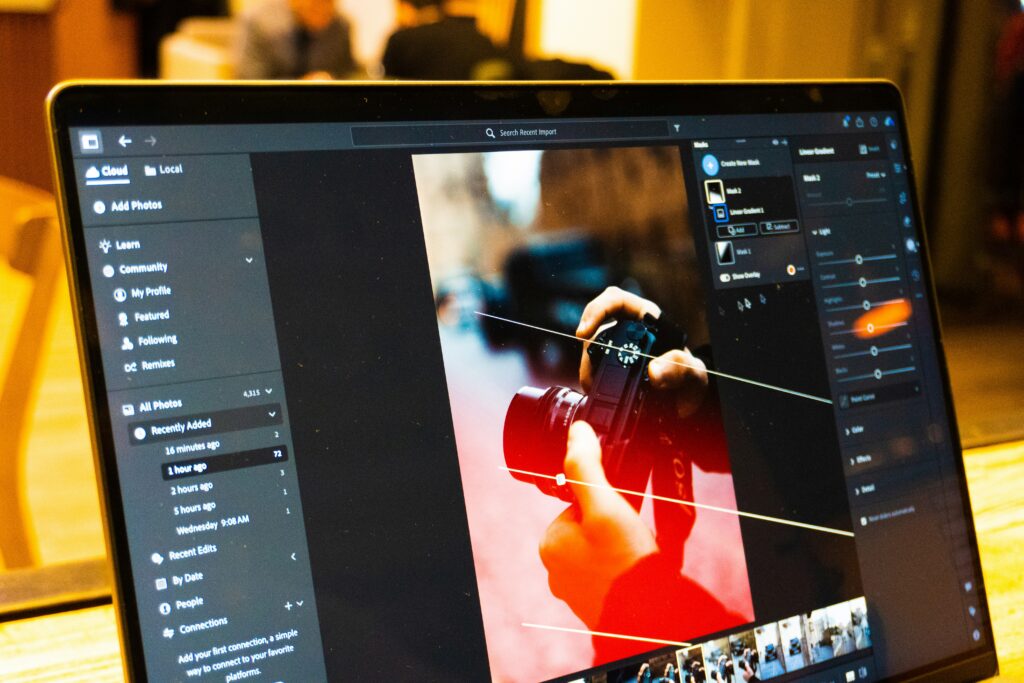
Editing is a crucial step that enhances the final look of any photograph. As a testament to its importance, the photo software market is projected to reach $37.25 billion by 2035. Photographers can use software like Adobe Lightroom and Photoshop, or even mobile applications. They can further refine their images by cropping, adjusting brightness and enhancing colors. Key editing techniques, including color correction and sharpening, can greatly improve an image’s overall quality.
6. Learn Basic Photography Terminology
To effectively communicate in the field of photography, it is essential to understand its common terms. Familiarizing themselves with terminology such as exposure, depth of field and composition provides a solid foundation. This knowledge will aid them in both learning and applying their photography skills with greater precision and creative intent.
7. Capture Candid Moments
Being authentic, especially for brands seeking to connect with their audience on a deeper level, is extremely important. In fact, 97% of customers agree authenticity is a key factor in deciding which brands they trust.
Candid moments filled with natural emotion often resonate more with viewers, providing a sense of realism and relatability that polished, staged photos can lack. To capture these powerful moments, photographers need to remain unobtrusive, creating a comfortable environment where genuine interactions and emotions can unfold and be captured naturally.
8. Invest in the Right Accessories
While a great camera is certainly important, the right accessories can elevate the experience. Investing in items such as a sturdy tripod, an external flash or a selection of lenses could improve the quality of shots or open the door to new techniques.
A tripod stabilizes the camera during long exposure shots, resulting in crisp, clear images in low-light conditions. Similarly, different lenses can alter perspective and focus. A wide-angle lens can capture expansive landscapes, while a macro lens can capture close-up details.
In addition to these core items, prospective photographers should consider a camera bag, which protects and organizes gear. It is also wise to carry extra batteries and memory cards, as running out of either can bring a session to an abrupt halt.
As skills advance, photographers may consider investing in lens filters. A circular polarizer filter can reduce glare from water and glass and deepen the blue of the sky. In contrast, a neutral density filter reduces the amount of light entering the lens, allowing for slower shutter speeds to capture silky-smooth waterfalls or clouds.
9. Join Photography Communities
Engaging with photography communities can provide invaluable feedback and foster continuous learning. By participating in online forums, local workshops or classes, beginners can connect with other enthusiasts to share experiences and gain crucial insights. Furthermore, networking within these groups can lead to exciting collaborations, which not only enhance technical skills but also create new opportunities for growth and exposure in the field.
10. Practice, Practice, Practice
Ultimately, the key to improving photography skills is consistent practice. Regularly going out with a specific goal in mind, rather than taking photographs without a clear objective, is essential for growth and developing a discerning eye. To keep this practice engaging and effective, consider setting personal projects or challenges, such as themed photography days. These structured exercises will push creative boundaries, reinforcing new techniques and steadily refining a photographer’s overall skills and unique artistic eye.
Embrace the Art of Photography
Photography is a powerful tool in the hands of businesses and marketers, helping them connect more deeply with their audience. By implementing these 10 tips, they can elevate their photography skills and create captivating images that enhance their brand’s identity. Mastering photography is an ongoing journey that requires patience, creativity and a willingness to learn.

Leave a Comment